Sudozi → Zone & Co.
Procurement Orchestration Platform
One procurement system, configured for 100+ companies.
- Founding Designer
- Oct 2020 – Apr 2026
- Web · Enterprise SaaS
- CEO, 3 Engineers, 1 Designer (me)
- 100+ Enterprise Organizations
- Enterprise · SaaS · B2B · Workflow
Founding designer across product, research, design system, and brand.
Visit live site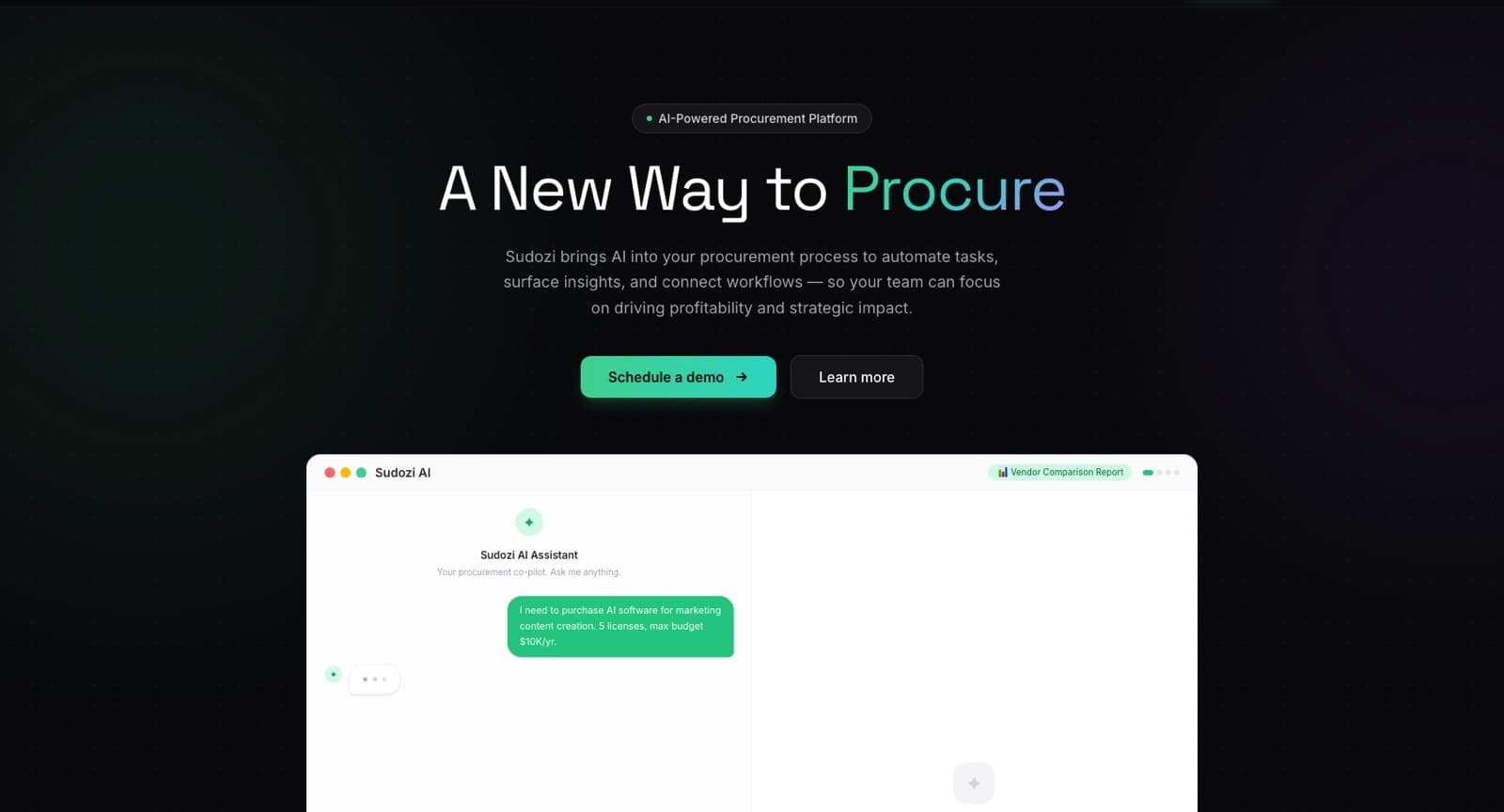
Overview
Sudozi grew from a rough MVP into enterprise procurement infrastructure without becoming a custom build for every client.
I joined at MVP and designed through acquisition by Zone & Co. in April 2026.
- 100+
- 0→1
- 2026
Problem
100 Clients. 100 Workflows.
Every company had different approvals, forms, thresholds, and compliance rules. Custom implementation would not scale; exposing every setting would not onboard.
- Admins needed control
- Requesters needed a simple front door
- Engineering could not configure every client by hand
Core decision
Constrain the Variability
Research showed that five workflow archetypes covered most cases. I made those patterns the defaults and exposed configuration only where the process truly varied.
- Interviewed 50+ procurement teams
- Five templates covered 80% of configurations
- Defaults first; advanced rules when needed
Product system
Admin Flexibility. Requester Simplicity.
Admins configure intake, approvals, vendors, invoices, and reporting. Requesters see one guided flow generated from those rules.
- Structured intake becomes the shared record
- Approval and payment states remain visible
- Vendor context follows every request
- Analytics close the loop for finance
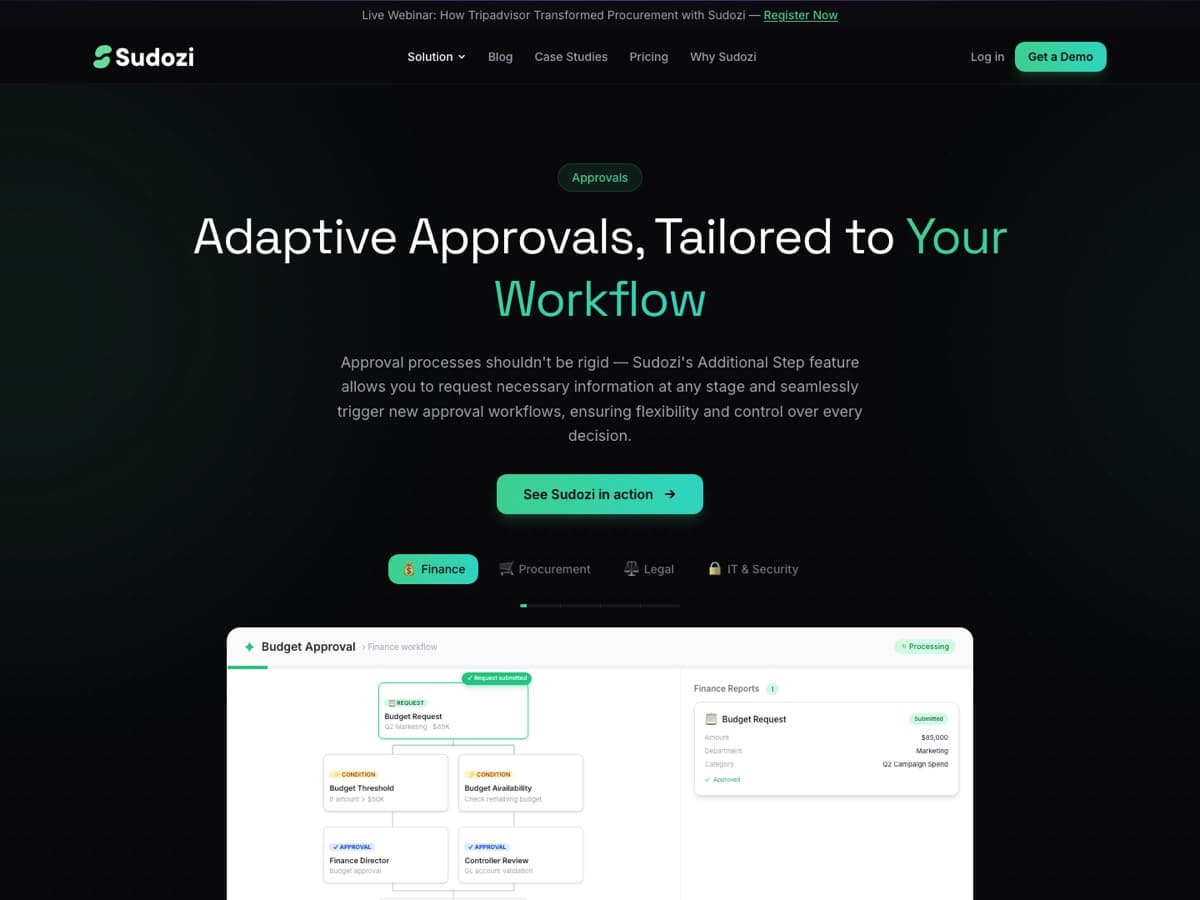
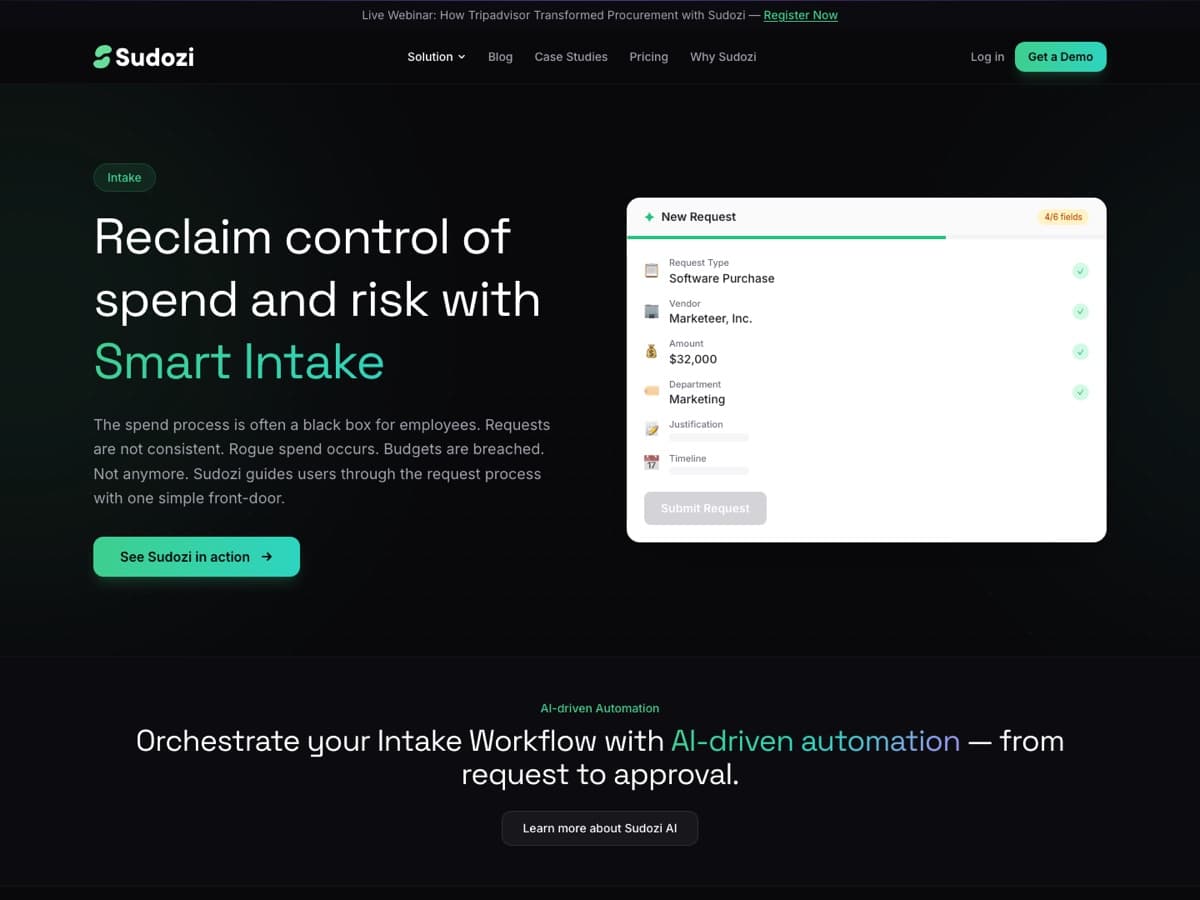
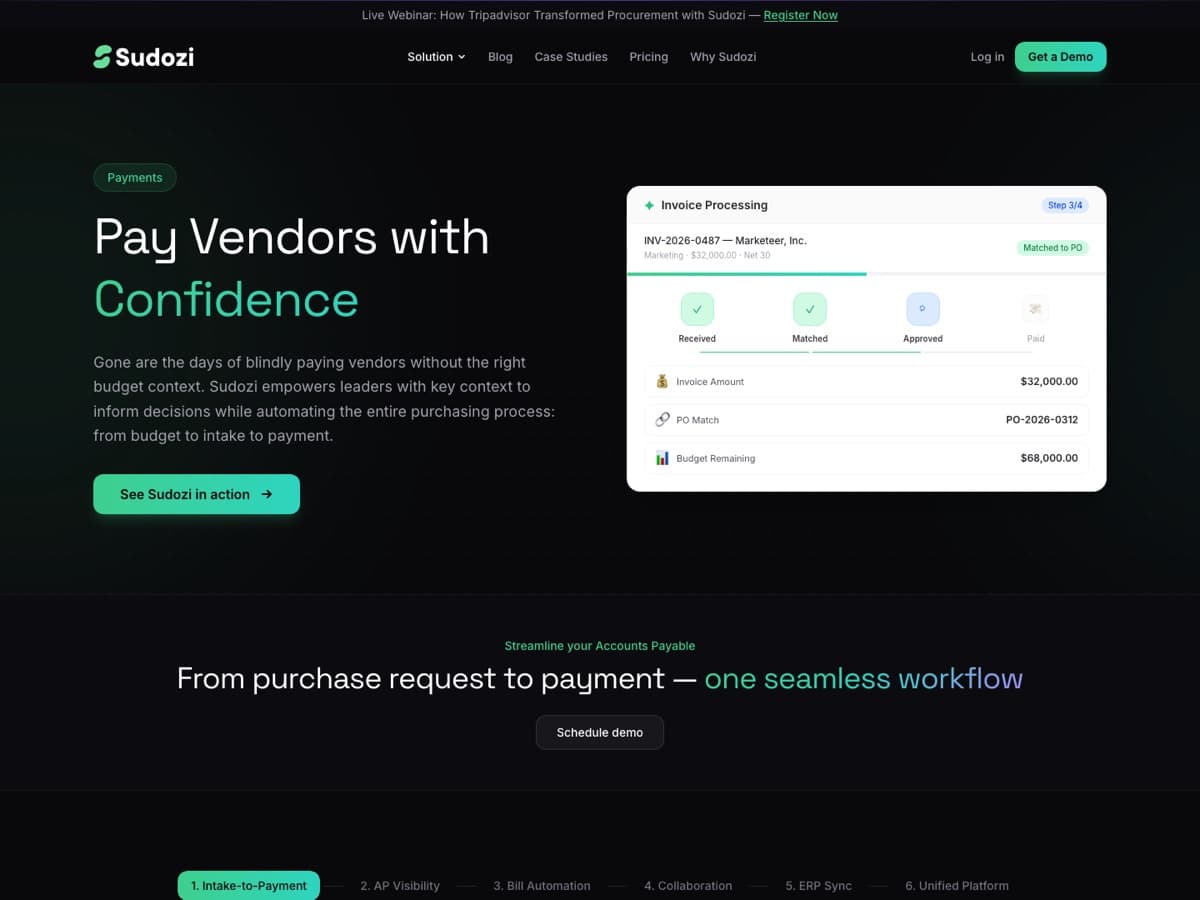
Admins configure the rules.
Intake, approvals, vendors, invoices and reporting are set here once per organization.
Keyboard: ← → to switch surfaces
Impact
From MVP to Enterprise Standard
The product grew from three pilots to 100+ organizations. Clients could launch and evolve workflows without an engineering ticket.
- 100+
- 5d→4h
- 75%
- 98%
“Sudozi finally gave us a procurement tool that adapts to how we work, not the other way around.”
Reflection
Key Learnings
Defaults Are Product Strategy
Good defaults made the common workflow fast without blocking edge cases.
Two Sides, One System
Every admin rule had to become a clear requester experience.
Predictability Builds Enterprise Trust
State, ownership, and history mattered as much as speed.